
Acme Brewing Co.
No. 86
San Francisco, CA
San Francisco, CA
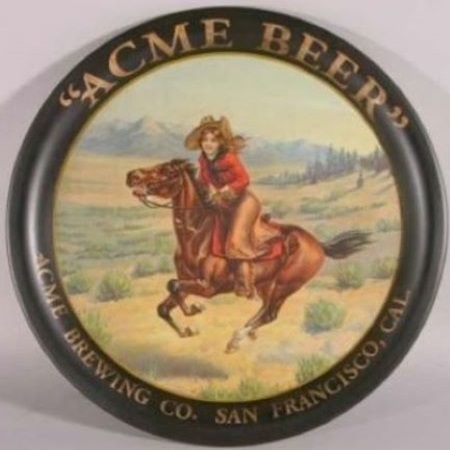
Acme Brewing Co.
No. 98
San Francisco, CA
San Francisco, CA

California Brewing Ass'n
No. 98
Napa, CA
Napa, CA

E. Porter Brewing Co.
No. 98
Joliet, IL
Joliet, IL
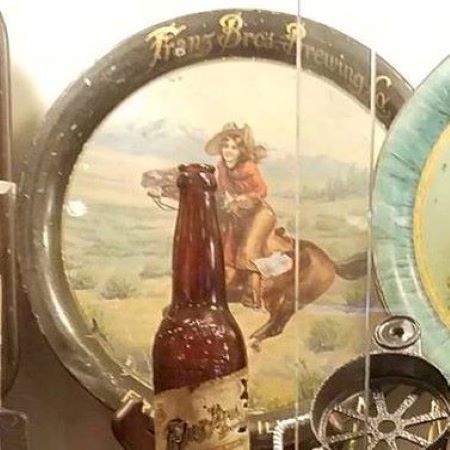
Franz Bros Brewing Co.
No. 98
Freeport, IL
Freeport, IL
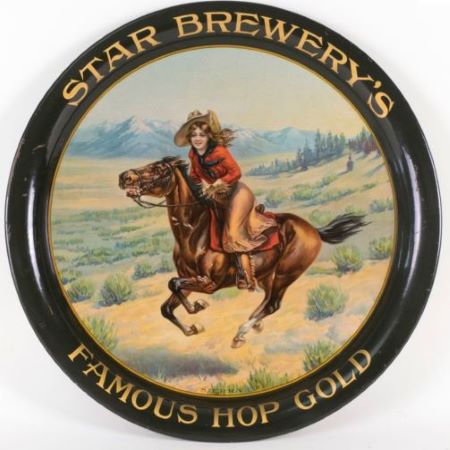
Star Brewery's
No. 98
Portland, OR and Vancouver, WA
Portland, OR and Vancouver, WA
The 'Stock' Exchange
The Meek Co.: No. 86 American Art Works: No. 98 "Sierra"
The Meek Co.: No. 86 American Art Works: No. 98 "Sierra"
Date: 1890 - 1900
Size: 13.25" Round & Oval
Type: Inverted Pie
Scarcity: Scarce
Value: $$$$ to $$$$$
Condition & Brewer Dependent
Size: 13.25" Round & Oval
Type: Inverted Pie
Scarcity: Scarce
Value: $$$$ to $$$$$
Condition & Brewer Dependent

Stock - Round
No. 98
--
--

Stock CCS
No. 98
--
--

Stock Oval
No. 86
--
--

Texatone Soda Co.
Dallas, TX

Texatone Soda Co.
Dallas, TX

Liberty Mfg. Co.
Denver, CO
General
“Sierra” present a bit of conundrum. We have examples with stock No. 86 AND No. 98. Examination does not reveal any variations in the design. The one difference we’ve noticed is that all of the trays that carry No. 86 are ovals; those with No. 98 are convex pies, square or curled corner signs. Why would the same design end up with two different numbers? If it’s simply the size/shape how come that didn’t happen with previous designs? Are there “missing” entries in the catalog that are simply unaccounted for because we have not encountered the design in an alternate size/shape that carried a “new” stock number? Not all examples of designs carry stock numbers on them. To our knowledge “Sierra” is the only design identified so far with two different stock numbers.
We have to admit we are not entirely sure if Sierra refers to the name of the woman depicted or the setting. However, as a name Sierra is both a surname and a feminine given name. It is the Spanish word for ridge or mountain range (probably derived from the Latin serra, meaning saw), and as such it connotes strength and groundedness. It originates from the Galicia and Asturias regions of northern Spain. While it is a legitimate Spanish first name it has been fairly rare historically, only appearing on the US name popularity charts in 1978.
“Sierra” is a departure from most previous Meek designs depicting women; most are either depicted in a more formal “portrait” setting or at least which the context of “a woman’s world.” Not only is “Sierra” engaged in action, but it’s more strenuous western cowgirl riding unlike the posed image in “No. 80, Good Friends.” The 1890's and early 1900's saw the entry of a number of territories into the Union as states, culminating with the introduction of Oklahoma as the 46th state in November 1907; perhaps “Sierra” and “Murietta” (No. 87) represented a sort of recognition of this event.
At this point, the entries of stock designs in Sahling’s workbook are still pretty much in numerical order and he has an entry in his workbook in January of 1908 entitled “Stock tray Western Girl” which we believe refers to this design (the other option would be #87 “Murietta” but he has another entry specifically for that design). In a bit of a mystery he then has an entry in November of 1908 for “Stock tray No. 98, Sierra”. We believe that the difference in the use of two different stock numbers for “Sierra” relate to the size/shape of the trays.
Size & Shape
Given the discussion above and the fact that we don’t detect any meaningful (there are some minor differences in how much of the image is included based on size/shape) variation in the design, we are including all variations here. As mentioned above there are convex pies, squares, and curled corner signs. We also have record of a single small (10.5"x13.5") oblong; however, we cannot be certain that it wasn’t also a square with an unfortunate/distorted picture online. Rims are black with gold advertising text. None of the examples we’ve seen have advertising on the face of the tray.
Hager & Price
Hager does not discuss this design other than to place its introduction in 1907 in his date table; but he does include it in his catalog as No. 86 (he does not have an entry for #98. This is a fairly desirable design, which combined with its relative scarcity means that it commands better than average prices for both brewery and non-brewery examples. Brewery examples do better although the delta is not as wide as other designs. Among breweries, Star and E. Porter occur most often.
“Sierra” present a bit of conundrum. We have examples with stock No. 86 AND No. 98. Examination does not reveal any variations in the design. The one difference we’ve noticed is that all of the trays that carry No. 86 are ovals; those with No. 98 are convex pies, square or curled corner signs. Why would the same design end up with two different numbers? If it’s simply the size/shape how come that didn’t happen with previous designs? Are there “missing” entries in the catalog that are simply unaccounted for because we have not encountered the design in an alternate size/shape that carried a “new” stock number? Not all examples of designs carry stock numbers on them. To our knowledge “Sierra” is the only design identified so far with two different stock numbers.
We have to admit we are not entirely sure if Sierra refers to the name of the woman depicted or the setting. However, as a name Sierra is both a surname and a feminine given name. It is the Spanish word for ridge or mountain range (probably derived from the Latin serra, meaning saw), and as such it connotes strength and groundedness. It originates from the Galicia and Asturias regions of northern Spain. While it is a legitimate Spanish first name it has been fairly rare historically, only appearing on the US name popularity charts in 1978.
“Sierra” is a departure from most previous Meek designs depicting women; most are either depicted in a more formal “portrait” setting or at least which the context of “a woman’s world.” Not only is “Sierra” engaged in action, but it’s more strenuous western cowgirl riding unlike the posed image in “No. 80, Good Friends.” The 1890's and early 1900's saw the entry of a number of territories into the Union as states, culminating with the introduction of Oklahoma as the 46th state in November 1907; perhaps “Sierra” and “Murietta” (No. 87) represented a sort of recognition of this event.
At this point, the entries of stock designs in Sahling’s workbook are still pretty much in numerical order and he has an entry in his workbook in January of 1908 entitled “Stock tray Western Girl” which we believe refers to this design (the other option would be #87 “Murietta” but he has another entry specifically for that design). In a bit of a mystery he then has an entry in November of 1908 for “Stock tray No. 98, Sierra”. We believe that the difference in the use of two different stock numbers for “Sierra” relate to the size/shape of the trays.
Size & Shape
Given the discussion above and the fact that we don’t detect any meaningful (there are some minor differences in how much of the image is included based on size/shape) variation in the design, we are including all variations here. As mentioned above there are convex pies, squares, and curled corner signs. We also have record of a single small (10.5"x13.5") oblong; however, we cannot be certain that it wasn’t also a square with an unfortunate/distorted picture online. Rims are black with gold advertising text. None of the examples we’ve seen have advertising on the face of the tray.
Hager & Price
Hager does not discuss this design other than to place its introduction in 1907 in his date table; but he does include it in his catalog as No. 86 (he does not have an entry for #98. This is a fairly desirable design, which combined with its relative scarcity means that it commands better than average prices for both brewery and non-brewery examples. Brewery examples do better although the delta is not as wide as other designs. Among breweries, Star and E. Porter occur most often.
Confirmed Brewer used Stock Trays

Non-Beer Related & Non-Tray Uses


Click the Picture to Return to Meek & Beach Stock Catalog Page

