
Aurora Brewing Co.
Aurora, IL

Bellingham Bay Brewery
Whatcom, WA

Bluff City Brewing Co.
Alton, IL

Cremo Brewing Co., Inc
New Britain, CT

Crown Brewing Co.
Cincinnati, OH

Independent Brewing Co.
Seattle, WA

Phillip Jung Brewing Co.
Milwaukee, WI

Kiewel Brewing Co.
Crookston, MN

Knapstein Brewing Co.
New London, WI

Koppitz-Melchers Brewing Co.
Detroit, MI
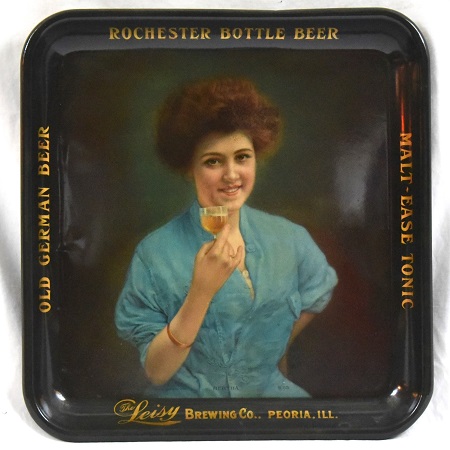
Leisy Brewing Co.
Peoria, IL

Lock City Brewing Co.
Lockport, NY

National Brewing Co.
Steelton, PA

Oconto Brewing Co.
Oconto, WI

Port Washington Brewing Co.
Port Washington, WI

William Rahr & Sons
Manitowoc, WI
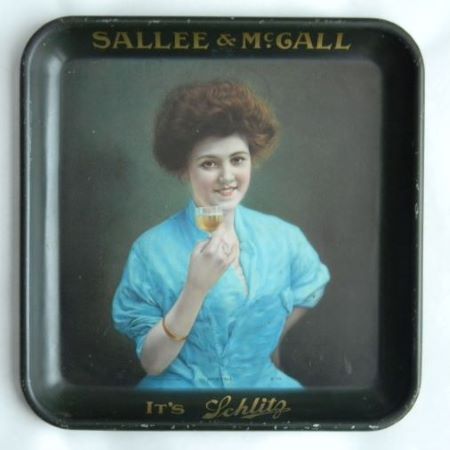
Sallee & McCall - Schlitz
Milwaukee, WI?

Savannah Brewing Co.
Savannah, GA

Susqueanna Brewing Co.
Nanticoke, PA

Ernst Tosetti Brewing Co.
Chicago, IL

C.A. Lunnemann - Liquors
Philadelphia, PA

Mountain Spring Water Co.
Reading, PA


Ashland Brewing Co.
Ashland, WI
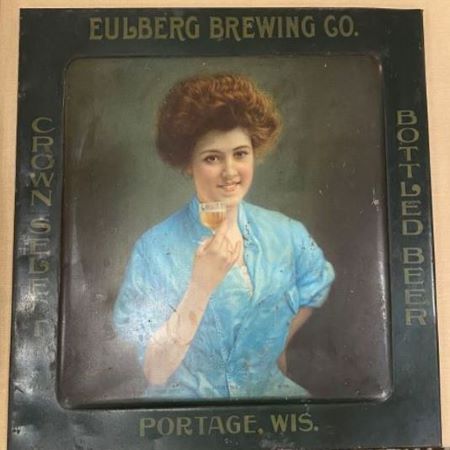
Eulberg Brewing Co.
Portage, WI
Knapstein Brewing Co.
New London, WI
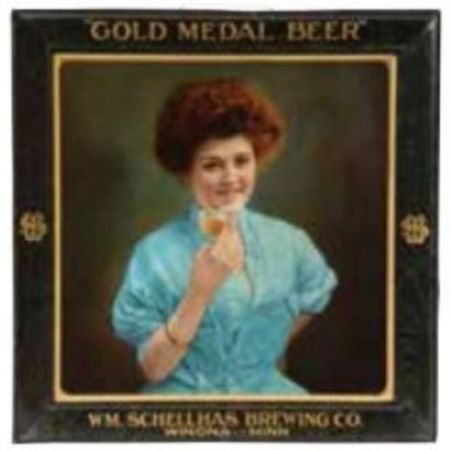
Wm. Schellhas Brewing Co.
Winona, WI
The 'Stock' Exchange
The Meek Co.: No. 99 "Bertha"
The Meek Co.: No. 99 "Bertha"
Date: 1909 - 1912
Size: 13.25" x 13.25"
Style: Pie
Scarcity: Very Common
Value: $$$ to $$$$
Condition & Brewer Dependent
Size: 13.25" x 13.25"
Style: Pie
Scarcity: Very Common
Value: $$$ to $$$$
Condition & Brewer Dependent

Confirmed Brewer used Stock Trays
Non-Beer Related & Non-Tray Uses
General
Similar to Minetta (No. 93) and Adeline (No. 137) which appear to use the same model, there appears to be two different tray designs that used the same model for “Bertha.” The twist is that they were produced by two different manufacturers! In Meek’s version she appears older than the version produced by competitor H D Beach. Unfortunately, Beach’s version does not carry either a copyright date or a stock number to give us a clue when it was produced and if it was earlier than the Meek version. That two different manufacturers located in the same small town of roughly 5,000 at the time would both use the same model hardly seems unlikely.
There are a couple of potential literary inspirations based on characters named Bertha, but both seem unlikely. The first is Bertha Mason from Charlotte Bronte’s Jane Erye. She is Jane’s main antagonist and the scene where she is introduced is arguably the most important in the novel. Bertha is “a mad-woman” who is literally locked in an attic. Bertha Mason is described as the violent and insane ex-wife of Rochester, although she has not been allowed to give us an account of her madness (there are no lines of dialogue attributed directly to her). All we learn about Bertha is either through Rochester’s description of her madness, or Jane’s biased (because she is the leading lady and in love with Rochester) perception of her. Not exactly an ideal character to reference in advertising.
The second possibility is from a short story by Henri Ren Albert Guy de Maupassant (Aug 5, 1850 - Jul 6, 1893), a popular French author and widely considered the father of the short story. His prolific and deeply admired body of work influenced a great number of writers including William Somerset Maugham, O. Henry, Anton Chekhov, Kate Chopin and Henry James.
He was a popular writer during his lifetime and had the good fortune to see that his stories were widely read. He has a short story entitled Bertha where, interestingly, the title character is also mentally ill or retarded. Again, not a particularly promising model for an advertising tray.
Sahling does have an entry in his workbook in December 1908 for “Stock tray, No. 99, Bertha.” It is the last stock tray entry for 1908, unless we consider “9 ½ plate Minetta.” There is an earlier entry in his workbook for “Square stock tray Girl in Blue” in Sept 1908; it’s not clear if this is the same design or something different.
Size & Shape
No. 99 appears exclusively as a square; no other tray shapes appear to have been used. It does occasionally show up as a square self-framed tin.
Hager & Price
Hager does not discuss this design other than to place its introduction in 1908 in his date table; he does include it in his catalog. Examples from Jung Brewing of Milwaukee; Aurora Brewing of Aurora, IL; Knapstein Brewing of New London, WI; and Oconto Brewing of Oconto, WI show up most frequently. Almost all examples are from breweries with an odd water or liquor company in the mix. Prices vary widely with less common breweries demanding fairly strong prices and more common one far less.
Similar to Minetta (No. 93) and Adeline (No. 137) which appear to use the same model, there appears to be two different tray designs that used the same model for “Bertha.” The twist is that they were produced by two different manufacturers! In Meek’s version she appears older than the version produced by competitor H D Beach. Unfortunately, Beach’s version does not carry either a copyright date or a stock number to give us a clue when it was produced and if it was earlier than the Meek version. That two different manufacturers located in the same small town of roughly 5,000 at the time would both use the same model hardly seems unlikely.
There are a couple of potential literary inspirations based on characters named Bertha, but both seem unlikely. The first is Bertha Mason from Charlotte Bronte’s Jane Erye. She is Jane’s main antagonist and the scene where she is introduced is arguably the most important in the novel. Bertha is “a mad-woman” who is literally locked in an attic. Bertha Mason is described as the violent and insane ex-wife of Rochester, although she has not been allowed to give us an account of her madness (there are no lines of dialogue attributed directly to her). All we learn about Bertha is either through Rochester’s description of her madness, or Jane’s biased (because she is the leading lady and in love with Rochester) perception of her. Not exactly an ideal character to reference in advertising.
The second possibility is from a short story by Henri Ren Albert Guy de Maupassant (Aug 5, 1850 - Jul 6, 1893), a popular French author and widely considered the father of the short story. His prolific and deeply admired body of work influenced a great number of writers including William Somerset Maugham, O. Henry, Anton Chekhov, Kate Chopin and Henry James.
He was a popular writer during his lifetime and had the good fortune to see that his stories were widely read. He has a short story entitled Bertha where, interestingly, the title character is also mentally ill or retarded. Again, not a particularly promising model for an advertising tray.
Sahling does have an entry in his workbook in December 1908 for “Stock tray, No. 99, Bertha.” It is the last stock tray entry for 1908, unless we consider “9 ½ plate Minetta.” There is an earlier entry in his workbook for “Square stock tray Girl in Blue” in Sept 1908; it’s not clear if this is the same design or something different.
Size & Shape
No. 99 appears exclusively as a square; no other tray shapes appear to have been used. It does occasionally show up as a square self-framed tin.
Hager & Price
Hager does not discuss this design other than to place its introduction in 1908 in his date table; he does include it in his catalog. Examples from Jung Brewing of Milwaukee; Aurora Brewing of Aurora, IL; Knapstein Brewing of New London, WI; and Oconto Brewing of Oconto, WI show up most frequently. Almost all examples are from breweries with an odd water or liquor company in the mix. Prices vary widely with less common breweries demanding fairly strong prices and more common one far less.


Click the Picture to Return to Meek & Beach Stock Catalog Page

